From WNYT to My Father’s Place: My 45 Years with Willie Nile


There are rock stars. There are cult heroes. And then there’s Willie Nile — the musical equivalent of that rookie ballplayer you saw in Double-A and immediately told your friends, “Trust me, this guy’s gonna be special,” only to spend the next 40 years alternating between feeling brilliantly vindicated and mildly annoyed the rest of the world took so long to catch up.
Back in my WNYT college radio days when I was juggling DJ and sports talk radio shifts before either one paid enough to cover a pizza and a Molson, I took great pride in two things: spotting baseball prospects before they became stars and finding musicians before the rest of America discovered them three albums too late. Sometimes I was right. (John Cougar) Sometimes I was so wrong (Novo Combo) I should’ve been banned from touching a turntable or discussing OPS. But the second I dropped the needle on Willie Nile’s debut album Willie Nile in 1980, I knew this wasn’t another one-hit wonder destined for the cutout bin next to the Shaun Cassidy records.
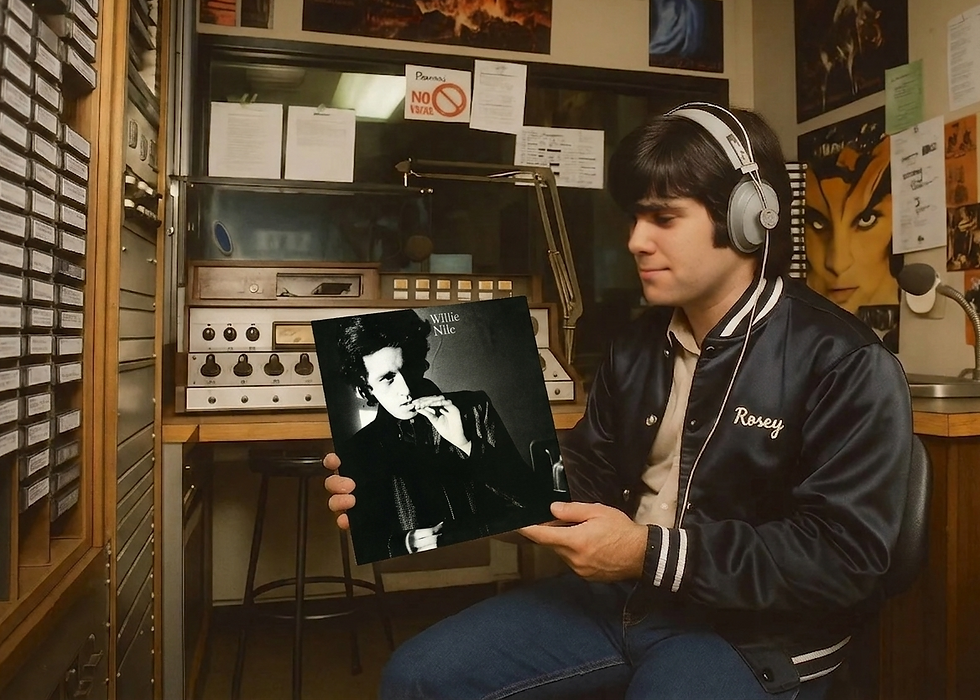
From the opening track “Vagabond Moon,” Willie had me hooked. The energy. The urgency. The poetry. And that line — “What a fine thing to make love and survive” — hit me like Keith Hernandez turning a 3-6-3 double play. It was smart, romantic, gritty New York rock and roll that carried the poetry of Dylan and the street-corner urgency of early Springsteen
The critics loved the album. Pete Townshend loved the album enough to invite Willie to tour with The Who in 1980. His follow-up album, Golden Down, only cemented the belief that this guy was headed for rock stardom. Then… poof.
Willie Nile disappeared.
Not in the “Vegas magician” sense. More in the “wait, whatever happened to that guy?” sense. Legal battles and record label nonsense derailed his career right as it was taking off. And remember — this was 1981 to 1991. There was no Google. No social media. No Wikipedia rabbit holes at 2 a.m. If an artist vanished back then, you basically had to hire Columbo to find out what happened.
Life moved on. Careers happened. Kids happened. The records stayed in the collection, but Willie faded into memory like an old Shea Stadium ticket stub.
Then came 1998.
A random conversation with a college friend — another Willie Nile believer from the old days — led to one of those primitive early internet searches that took seven minutes and sounded like a fax machine being strangled. Up popped an article about Willie doing house concerts. House concerts! I thought, “This is either going to be magical or the beginning of a Dateline episode.”
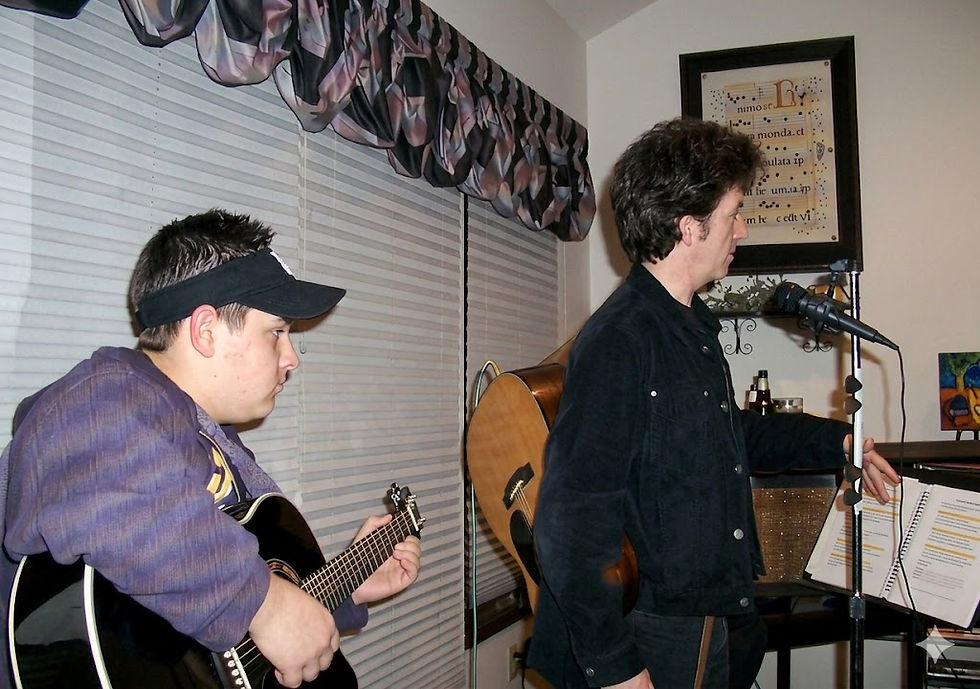
At the time, my son Josh was learning guitar and piano, my wife and I thought maybe seeing a real songwriter up close could inspire him to keep playing. So we gathered some friends, set up the house, and Willie Nile walked through our front door with a guitar and enough energy to power Nassau County.
That night started what has now become a 28-year friendship and musical journey.
There were multiple house concerts. Willie playing my 50th birthday party. Friends of mine becoming lifelong fans after one show. My friend Roberta getting behind the drums during one unforgettable night. Josh getting to play guitar and piano with Willie several times over the years. My wife Beth, who was hooked the very first time she saw him perform, quickly became part of the Willie Nile orbit. And my daughter Liana—who first saw him at 10 years old and couldn’t quite understand why anyone would sing “I want to be cremated” (turns out it was the Ramones’ “I Wanna Be Sedated,” though honestly she may have been onto something either way)—has since grown into someone who not only gets it, but appreciates just how much life and humor lives inside his music. Countless concerts. Countless memories. And through it all, Willie remained exactly what he was the first time I heard him back in 1980: authentic, passionate, funny, grateful, and utterly incapable of phoning in a performance.
Which brings us to last night at My Father’s Place — not the legendary original version where Springsteen and everyone else once rattled the walls, but its worthy modern incarnation tucked inside The Roslyn Hotel.
And if Willie Nile has taught me anything over four decades, it’s this:
Some artists get older.
Others just become more Willie Nile.
Willie came out to a roar from a crowd that, if we’re being honest, looked like the world’s loudest AARP meeting. Gray hair, no hair, reading glasses, orthopedic optimism, and enough classic rock T-shirts to stock a vintage shop in Bellmore. But everybody came ready to rock.
Before the first chord, Willie apologized and admitted he was feeling under the weather. What none of us knew at the time was that he was battling a pretty nasty stomach bug and later admitted after the show he was amazed he made it through the night unscathed. You never would have known it watching him perform. If this was Willie Nile at less than 100 percent, I’m not sure the building could survive him fully healthy.
He opened with “Welcome to My Head,” which might be the perfect introduction to the wonderfully chaotic genius that is Willie Nile. The song is basically a guided tour through the jukebox pinball machine inside Willie’s brain. In one song alone you get Busby Berkeley, Frankenstein, the Dalai Lama, Jean-Paul Sartre, disco parties, pastel-colored Russian armies, and pig parades. Most songwriters would need a three-season Netflix series to fit all that in. Willie does it in four minutes and somehow makes it feel completely natural. His lyrics have always lived in this beautiful space between Greenwich Village poet, rock-and-roll lifer, and the guy at the end of the bar — the Cliff Clavin type — who starts explaining something completely random and accidentally ends up delivering the most insightful truth of the night.
From there he moved into material from his latest album *The Great Yellow Light*, which Willie explained was inspired by Vincent van Gogh’s descriptions of the blazing sunlight and colors he experienced while living in southern France. That’s part of the Willie Nile concert experience: you come for the rock and roll but leave feeling like you accidentally just sat in on a really cool college humanities class.
The standout from the new material was “Wake Up America,” a passionate plea for unity in a country that currently treats Thanksgiving dinner conversations like cage matches. Willie dedicated the song to Stephen Colbert and delivered it less like a political statement and more like an emotional SOS flare shot into the night sky. When he sang:
“Wake up America, red white and blue
You used to be great, what happened to you…”
you could feel the crowd leaning in. And later:
“I’m one of the millions, do you even give a damn
I’m the son of immigrants, I’m the daughter of slaves…”
the song became something larger than politics. It became about humanity, compassion, and remembering we’re all riding in the same beat-up station wagon whether we like the bumper stickers or not. It had the spirit of those great protest songs from Dylan, CSNY, Buffalo Springfield, and early Springsteen — music with something to say but smart enough not to scream it at you with a bullhorn.
One of the night’s most touching moments came when Willie spoke about his father, Robert Charles Noonan Sr., who at 108 years old remains sharp, funny, independent, and apparently more energetic than half the people I know under 60. Willie told stories about his dad’s legendary sense of humor, daily crossword marathon sessions, and the fact he still enjoys his Happy Hour. Somewhere along the line Joe Biden even called to wish him a happy birthday, which honestly sounds like the kind of thing that only happens in a Willie Nile song.
That led into “An Irish Goodbye,” which started as a phrase that popped into Willie’s head after his daughter returned from a trip to Ireland. What began as a playful idea about slipping out of a party unnoticed evolved into something deeper — a reflection on family, mortality, and the quiet grace of saying goodbye without drama. Despite the emotional undercurrent, the song had the entire room singing along to the chorus:
“An Irish goodbye, an Irish goodbye
Here’s fire in your whiskey, here’s mud in your eye…”
By the second chorus the audience sounded like a bar full of old friends raising one final glass together. Equal parts Irish pub anthem and emotional family letter, it was one of those songs that sneaks up on you emotionally while your foot is still tapping.
Then came the moment that transported me straight back to 1980 and the WNYT studios.
The opening chords of “Vagabond Moon.”
For a second I was no longer sitting in My Father’s Place. I was back in college dropping the needle on side one of Willie’s debut album for the very first time, wondering who this guy was and why he sounded like he’d somehow wired the electricity of New York City directly into a guitar amp. More than four decades later, the song still crackles with that same energy.
The band itself was phenomenal all night.
Their cover of Lou Reed’s “Sweet Jane” turned into a nearly seven-minute New York rock-and-roll revival meeting. Guitarist Jimi K Bones kicked things off with a blistering solo that reminded everyone why he’s spent decades touring and recording with some of rock’s biggest names. The guy plays guitar the way Shea Stadium sounded in Game 6 of the ’86 World Series when the ball went through Bill Buckner’s legs — pure chaos, rising disbelief, and then pure New York roar.
Bassist Johnny Pisano followed with a monster solo of his own, holding down the groove with the confidence of somebody who has spent a lifetime sharing stages with rock royalty. Pisano has long been Willie’s musical right hand, and you could feel the chemistry between them in every note.
Then drummer Jon Weber detonated whatever was left of the room with a drum solo that felt like Keith Moon had possessed him somewhere around minute two. Weber, whose Broadway resume includes Rock of Ages and Hedwig and the Angry Inch, played with the kind of joyful chaos that makes you worry slightly for the safety of nearby cymbals.
Another highlight was Willie’s moving rendition of Dylan’s “Blowin’ in the Wind,” performed on the eve of Dylan’s birthday. It wasn’t flashy. It didn’t need to be. Just a songwriter paying tribute to another songwriter who helped teach the world that lyrics could punch you in the gut while sounding deceptively simple.
Other standouts included “House of a Thousand Guitars,” “Run Free,” “We Are, We Are,” and one of my all-time favorites, “One Guitar.” In concert, that song hits like a rallying cry from another era — part protest song, part revival meeting, part street march with a melody. When Willie sang:
“I got no gun to shoot, all I’ve got is ONE GUITAR…”
it felt less like a lyric and more like a mission statement. A reminder that music still matters. That songs can still challenge, heal, inspire, and unite people — even in a world where most attention spans now last shorter than a TikTok video featuring a squirrel on a skateboard.

By the end of the night, my wife Beth and I, along with our friends Ross and Roberta — now longtime Willie converts themselves — walked out smiling the way people always do after a Willie Nile concert. Partly because the music is great. Partly because Willie himself radiates gratitude, joy, and authenticity. And partly because for two hours you’re reminded what rock and roll is actually supposed to feel like.
If you’re not familiar with Willie Nile’s music, do yourself a favor: visit his website, buy a couple of albums, and dive in.
You can thank me later.


Willie Nile and Jesse Malin two of the greatest "undiscovered" NYC musical treasures.
Not only do we love Willie, but we love the fact that you introduced us to him! The concert was amazing!