Comfort Food for the Baseball Soul: Strat-O-Matic, Old Cards, New Friends,Heartbreak and Home Runs


There are certain smells that never really leave you.
Fresh-cut grass. Old baseball cards that still have that bubble gum smell 50 years later. The faint electrical hum of a basement light that takes a second to warm up and never quite commits. A folding table with one leg shorter than the others, with duct tape on the edges. A faded and stained score sheet. Dice that have been rolled so many times they’ve lost their sharp edges much like the men rolling them.
Basements mattered once. They still do.

That’s where a lot of childhood happened where summer nights lasted forever, winters meant doubleheaders, and the outside world politely waited its turn while we decided whether to bring the infield in. Bad lighting. Worse bullpen management. Absolute confidence that this move, right now, was genius.
Strat-O-Matic is not nostalgia; it’s a pause button, a chance to catch a breath in a world that’s moved too fast.
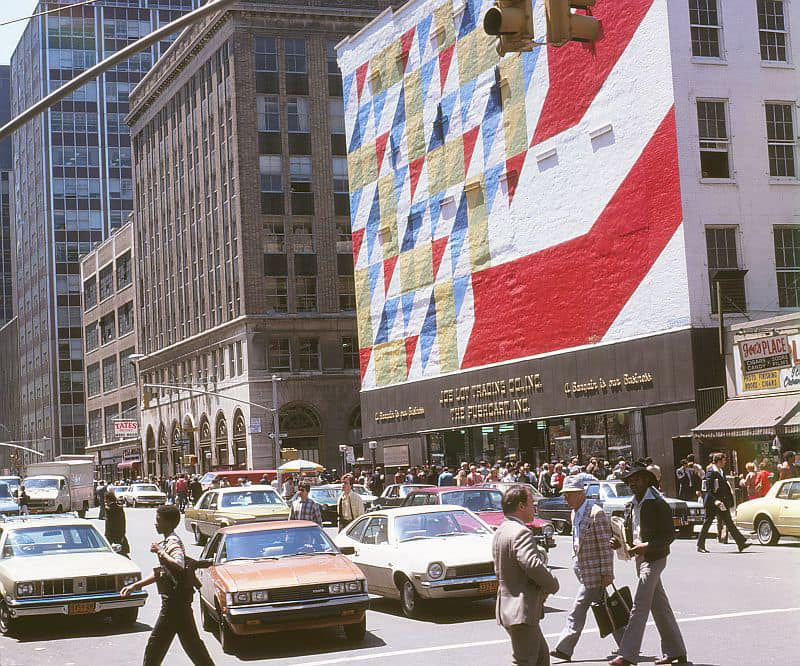
I first rolled the dice when I was ten years old. My parents bought me the game at a place called Job Lot Trading Co.The Push Cart, which already sounds like something out of a long-lost New York coming-of-age Neil Simon movie. It wasn’t just a game. It was a revelation. The cards. The dice. The miracle that a real baseball game could unfold on a table because of my lineup, my decisions, my roll of the dice.
And, of course, the 1969 Mets. Always the ’69 Mets.

All these decades later, I still play. And just like that guy in the Hair Club for Men commercial, it feels only fair to say this out loud: I’m not just writing about the Long Island Strat Club I’m a member. And yes, I’m also the president.
I swear this wasn’t part of the plan.
The Long Island Strat Club didn’t begin in a smoke-filled rec room or someone’s childhood basement. It began in 2020 (you know, the pandemic—you remember that, right? How many of you still sing “Happy Birthday” while washing your hands? And if not, please don’t touch my dice), on Zoom, when the world felt upside down and inside out and nobody was quite sure what day it was anymore.
In our house, that meant Zoom game nights. My wife and I found ourselves setting up virtual zoom rooms for bingo, Trivial Pursuit, and anything else that involved friendly voices and the illusion of normalcy. It wasn’t perfect, but it was connection. It was laughter echoing through laptop speakers. It was proof that even in lockdown, people still wanted to gather.
Somewhere between a garbled question about who invaded Spain in the 8th Century and a bingo card frozen mid-screen, a thought crept in: What other games could survive this strange new world? And then, like a Denny McLain fastball right down the middle to Mickey Mantle, it hit me.
In that moment, Strat became more than a game. It became a lifeline. I think anything during the pandemic that gave you a connection to the outside world mattered. In some ways, Strat was comfort food for me it brought me back to a safe space, to the early childhood version of myself sitting on the floor, rolling dice, believing that outcomes could still be explained by numbers and chance.
Colin Cosell, the Mets’ public address announcer, felt it too. “It was a fantastic way to connect and have fun during a scary time,” he said. “The connection aspect was invaluable.”
Russ Cohen, noted author, called it “nice to re-visit the game” when everything else felt uncertain.
Brian Cuban, also a noted author and longtime Strat-O-Matic player (not to mention a die-hard Pirates fan), jumped at the chance to play the game he loved as a kid— even if it sometimes got a little cumbersome. it was worth it all to manage some of his favorite Pirates once again.
Larry Ditkoff, who works in the financial field, said it was fun to meet new people and play Strat again, something he hadn’t done since around 1975.
The dice roller on a screen wasn’t the same nobody pretended it was but hearing familiar voices, arguing over strategy, groaning at bad rolls, laughing at worse ones… that mattered. A lot. As much as we like to believe technology makes everything better, pressing a button to roll dice is not the same as actually rolling them yourself. There’s no weight. No sound. No split second where the cube rattles and you whisper a small, completely irrational prayer to the Strat gods.

The online dice roller served a purpose, and during that moment in history it was necessary but it was still a compromise. It was the Strat-O-Matic equivalent of having a serious, passionate debate with Alexa about who was the better Darren Stevens on Bewitched: Dick York or Dick Sargent. Useful? Maybe. Satisfying? Not really. (And for the record, I’m Team York.)
Still, even without the feel of the dice, the connection held. The voices, the rhythms, the shared language of baseball and probabilities filled in the gaps. It wasn’t perfect—but neither was the world at the time—and somehow, that made it exactly what we needed.
Still, everyone knew the truth. Strat is meant to be played face to face. Zoom got us through, but it was never the destination. So as soon as the world began inching back toward something resembling normalcy, My friend and fellow Strat lover Jon Meyers and I got to work.
We decided to build an honest-to-goodness, dice-on-the-table Strat-O-Matic league. We made it official—registered the club on the Strat-O-Matic website, planted our flag, and let the world know we were open for business. I joined every Strat group I could find on Facebook, spread the word, answered messages, explained the rules, reassured people that yes, this was a real thing and yes, actual dice would be involved.

And just like that—almost without us noticing—it happened. The emails turned into conversations. The conversations turned into commitments. And before we knew it, we didn’t just have an idea or a Zoom workaround anymore. We had ourselves a league.
So when we finally gathered in person, something clicked immediately. The energy shifted the second the dice hit the table.
For me, the difference was everything. “Playing face to face was electric,” I said. “It was intense. It was fun. The games moved quicker. Seeing your opponent across the table instead of on a screen made it more competitive.”
But it was also something deeper than competition. Maybe there’s a reason that, even with all the technological advances, all the games we can play on our phones with a swipe or a tap, nothing replaces sitting down, unboxing a game—any game—and playing it with friends. There’s something about the ritual of it. The shared space. The eye contact. The pauses. The laughter that doesn’t lag or freeze.
In a world where so much is instant and disposable, these moments feel earned. Maybe even rarer. And because of that, more cherished than ever. Strat didn’t just survive the digital age by accident—it reminded us that some experiences aren’t meant to be optimized. They’re meant to be shared, across a table, with dice in your hand and people you care about on the other side.
The league eventually found a home in an unlikely place—the Long Island Welcome Center community room, right off the LIE. Travelers stop in to stretch their legs, grab a snack, maybe take an I Love NY selfie.

Meanwhile, we’re inside setting lineups.
There’s a lighthouse out front. A Taste NY counter nearby. Electric car chargers humming. And inside, nine Strat teams battling it out like it’s still 1976 and tomorrow’s responsibilities can wait.
We’re entering our sixth season now. Nine teams. Eleven players. Two co-managed clubs. Some of us bring notebooks. Some bring superstition. All of us bring opinions.
This isn’t just a bunch of guys reliving their youth — though there’s plenty of that.
Scott is retired and once walked the length of Long Island from the Triborough Bridge to Montauk “for his 60th birthday.”
Jon is a retired teacher, still obsesses over draft prep (and obsesses is an understatement. You can practically visualize him as Dustin Hoffman’s Raymond Babbitt in Rain Man, except instead of “15 minutes to Wapner,” he’s softly muttering, “10 days till the draft… 10 days till the draft”). “I really enjoy the pre-draft work,” he admits.

And on draft night, Jon transforms. He becomes El Exigente from those old 1970s coffee commercials, leaning back, narrowing his eyes, evaluating your selection with the seriousness of a Supreme Court justice. If you draft a player and hear Jon say, “Good KAWD”—the way it sounds when Jon says card—you know you’ve picked wisely. It’s Strat approval at the highest level, and it doesn’t get handed out lightly.
Lon raised five kids who had “not the least interest” in Strat, promised his wife he’d find an adult league one day, and finally did.
Rich O’Conner, a sports television producer and college classmate of mine, who worked on American Gladiators, got hooked coming out of COVID. “I was interested in both the sports and social aspects,” he says. “I wanted to meet more people my age who had similar interests as me.
Arnie is a retired journalist who continues playing even when he winters in Florida, playing his games over zoom.
These are men with careers, families, histories. And yet they can all still tell you exactly where they were the first time they rolled the dice.
Ask anyone how they got hooked and you’ll hear the same thing, told a dozen different ways.
High school friends. Older brothers. A friend of a friend whose older brother really knew the rules.
Jon remembers drafting teams in 1976 and players he’s never forgotten — “Champ Summers, Jose Cruz, Terry Puhl, Joaquin Andujar.”
Russ wanted “as many Mets as I could get,” especially the 1975 Tom Seaver card and the 1976 Dave Kingman card, even if he didn’t love “the way his home runs landed on the card.”
Lon remembers playing Strat “2–3 times per week year round” in the 1970s, with snacks, breaks to throw a ball outside, and the kind of friendships that only form when time doesn’t feel scarce yet.
Larry recalls his first league. Al Oliver hit something like .500 and I remember caring about the results. Dave Kingman hit like .400 [so much for realism].
Rich explains If you love baseball, this is an additional way to experience the game. And it's a certain layer of nostalgia. I love looking at a card and thinking, I thought he was faster, I thought he had more home runs.
Arnie, a math major turned journalist, keeps it simple: he just loves the strategy. “I like playing the older seasons, it brings back memories of players and games I saw way back when as well as managing real life players”
From the outside, it doesn’t look like much. You might mistake it for an AARP meeting, the monthly gathering of the Water Buffalos, or the Long Island chapter of the “International Order of Friendly Sons of the Raccoons.”
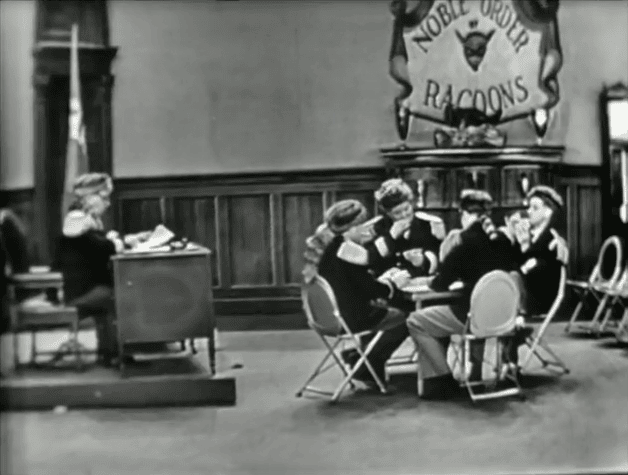
But step inside, and it’s a different world. Nine Strat teams. Eleven players. Dice clattering. Lineups being argued over with the intensity of a World Series Game 7. Trash talk flying like fastballs. Good luck charms, bobbleheads, starting lineup figures, baseball cards,the largest assortment of dice north of Las Vegas and Funco figures watching over every move. And let's not forget the group texts that should never be read aloud.

Inside, it hums.
For me it’s like a weekly high school reunion even if you didn’t go to high school with them. Some people play poker or cards. We play Strat.
Jon says it “can get intense especially between partners.”
Lon remembers rituals from his teenage years, rolling dice “one at a time” as the tension built, hoping for anything but a disaster.
"Especially when the room is full, there is good energy and spirit,” Rich says. “What surprised me is how serious some people take the game, but I also realized a lot of these guys played or still play competitive sports, so it’s still an outlet that way for them. The text chats between weeks are also fun."

Colin calls it “equal parts trash talk and support.”
Scott, a two-time league champion, recalls the nerves of playoff baseball: “Some days you feel nervous about the matchup. That’s how I felt for my semifinal this year. Game one, I had a player injured that I really needed against the other team’s pitching. Over the next three games, multiple players got hurt. Somehow, I won game four to tie the series before my team got back to full strength for the final. For the championship, I wasn’t nervous at all. I felt confident with the matchup. Just like watching baseball in real life, sometimes you can tell your team is going to win that day.”
I was the team Scott beat that year, and I can concur—when he won game four, my shot at a third championship in five seasons suddenly looked very slim.
Strat delivers heartbreak and glory, gives you everything, takes it all away, and still somehow makes you come back for more.
Scott put it best: “You get that big rush in critical moments in the game when the right roll can win you the game.”
And when it doesn’t?
You shake hands. You complain. You come back next week.
Strat taught analytics before analytics had names. Players learned to calculate stats long before anyone heard of OPS or WHIP, to appreciate the value of on-base percentage and defensive range, and to gain a newfound respect for managers. And everyone discovered something about themselves — patience, stubbornness, competitiveness — and most importantly, the same hopeful faith that comes with rooting for your favorite baseball team: that somehow, the baseball gods, and the roll of the dice, might finally smile on you in the next season.

The dice still roll.
The tables still wobble.
The innocence still sneaks through.
Even into adulthood.
And beyond.
Lon said it best “Much like the actual on-field game,Strat is essentially a children’s game played best by adults.”
Which might be the most honest sentence ever written about baseball and Strat and as a writer, I don’t think I could have closed this article any better myself.

Comments